



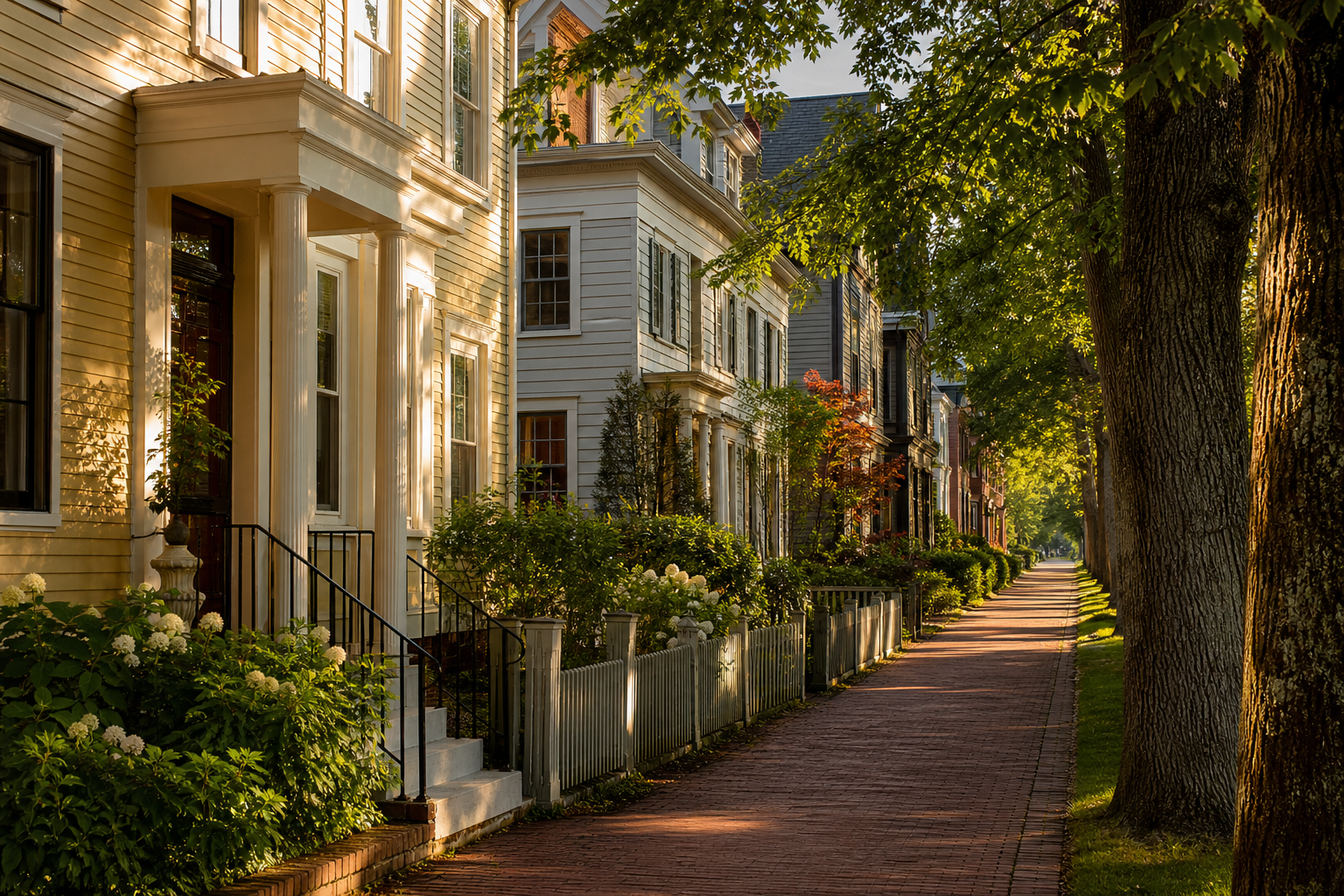
Salem's historic downtown blends preserved architecture, walkable amenities, and ongoing revitalization into a competitive real estate market. The median sale price sits at $700,000, with homes moving in roughly 45 days. Buyers and investors should understand how historic designation, renovation constraints, and strong local demand shape every transaction.
Is Salem's historic downtown a good place to buy real estate?
Yes, Salem's historic downtown is one of the most compelling real estate markets on the North Shore. The median sale price is $700,000, homes are moving in roughly 45 days, and the combination of preserved architecture, walkable amenities, and continued city investment makes this area attractive to buyers, investors, and long-term owners alike. That said, historic properties come with specific considerations that can make or break a purchase decision.
Salem's downtown isn't just the witch trials and Halloween tourism. I've watched this neighborhood evolve over more than two decades of working the North Shore market, and what's happening here right now is worth paying close attention to.
The city has invested steadily in its core, from streetscape improvements along Essex Street to the ongoing activation of Derby Street and the waterfront. Those investments don't just improve quality of life. They move property values. If you're thinking about buying or investing in Salem's historic downtown, here's what I think you need to understand before you make an offer.
The Market in Numbers: What Salem Downtown Looks Like Right Now
Based on recent Zillow market data, Salem's current numbers tell a clear story: this is a market with real demand and limited supply.
Market Indicator Current Figure Median sale price $700,000 Median days on market 45 days Active listings for sale 74 New listings (last 30 days) 34 Homes sold (last ~90 days) 141
Those 141 sales against 74 active listings means the pipeline is moving faster than inventory is building. When you see that ratio, you're looking at a market that still favors sellers, even as broader Greater Boston conditions have softened from their 2022 peak. For buyers, that means preparation matters. For investors, it means good properties don't sit.
Keep in mind that a $700,000 median covers a wide range. A renovated Victorian condo on Chestnut Street and a fixer-upper triple-decker near the commuter rail are both in this market. The specific street, build year, condition, and proximity to downtown amenities will move your number significantly in either direction. That's exactly the kind of nuance a local market analysis is designed to unpack.
What Makes Salem's Historic Downtown Different (and What It Means for Your Purchase)
Salem is one of Massachusetts' most intact 18th and 19th century urban cores. The Salem Maritime National Historic Site anchors the waterfront, and large portions of the downtown fall within the City of Salem's historic preservation districts. That designation is both an asset and a set of constraints you need to understand before you buy.
Historic Designation: The Value Upside
Properties in recognized historic districts tend to hold value well over time. Buyers who want authentic architecture, original details, and a walkable urban environment are willing to pay for it, and that demand has proven durable even in softer markets. According to the National Association of Realtors, walkability and neighborhood character consistently rank among the top factors buyers cite in purchase decisions.
Salem also benefits from Massachusetts' Historic Rehabilitation Tax Credit, which can offset a meaningful portion of qualified rehabilitation costs on certified historic structures. For investors buying income properties or buyers taking on substantial renovations, this program deserves a close look before you finalize your budget.
Historic Designation: The Constraints
If your property falls within a local historic district, exterior changes typically require review and approval from Salem's Historic District Commission. That includes window replacements, siding, rooflines, and additions. The process adds time and can add cost if your renovation plans need to be redesigned to meet preservation standards.
This isn't a reason to avoid historic properties. It's a reason to go in with eyes open. I always encourage buyers considering a historic home to pull the property's permit history and understand what work has already been done, what approvals were obtained, and what's still on the owner's wish list. Unpermitted work on a historic structure can become a real problem at closing.
The Revitalization Factor
Salem has been intentional about downtown investment for years. The City of Salem's Economic Development office has supported new business corridors, adaptive reuse of historic commercial buildings, and infrastructure improvements that make the downtown core more livable year-round, not just during October.
The MBTA's Newburyport/Rockport commuter rail line puts Salem about 30 minutes from North Station, which continues to drive demand from Boston-area buyers priced out of the city. That transit access is a structural demand driver that doesn't go away when the market cools.
I believe real estate is the most reliable path families have to build and preserve generational wealth, and Salem's downtown is a strong example of why location and long-term civic investment matter as much as the property itself. Neighborhoods that cities keep investing in tend to reward patient owners.
Buying in Salem's Historic Downtown: What to Think Through
Property Types You'll Encounter
Salem's downtown housing stock is genuinely diverse. You'll find:
Condominiums in converted historic buildings, often Victorian or Federal-era structures split into 2-6 units, with HOA structures that vary widely in quality
Single-family homes on quieter streets off the main commercial corridors, ranging from well-maintained to in need of significant work
Multi-family properties (2-4 units) that attract both owner-occupants and investors looking for rental income to offset carrying costs
Mixed-use buildings with commercial ground-floor space and residential above, which require a different kind of financing and due diligence
Each of these comes with a different financing profile, insurance consideration, and management reality. The Consumer Financial Protection Bureau's homebuying resources are a good starting point for understanding loan types, but verify everything with your lender for your specific property type.
Insurance and Older Structures
Older homes in Salem's historic core can present insurance challenges, particularly around knob-and-tube wiring, older plumbing systems, and in some cases, proximity to the waterfront. The Massachusetts Division of Insurance oversees homeowner's insurance in the state, and it's worth getting insurance quotes before you're under contract, not after. A policy that's hard to place or priced higher than expected can affect your effective carrying costs in ways that matter to your decision.
Working with an Agent Who Knows This Market
I've said this before and I'll keep saying it: local market knowledge matters more than a big national brand when you're buying in a specialized market like Salem's historic downtown. The difference between a property on a high-traffic tourist corridor and one a block off it isn't just a quality-of-life question. It's a pricing and resale question. Knowing which streets hold value, which buildings have had HOA issues, and which properties have complicated permit histories is the kind of intelligence that comes from working this market every day.
If you want to see how a specific property compares to what's actually sold recently, take a look at how local comparative analysis works in Greater Boston before you start making offers.
Frequently Asked Questions
Are Salem historic homes a good investment in 2026?
Salem's historic downtown has shown durable demand, supported by commuter rail access to Boston, ongoing city investment, and consistent buyer interest in walkable urban neighborhoods. With 141 homes sold in roughly the last 90 days and a median of 45 days on market, the market remains active. As with any investment, the specific property, its condition, and your financing structure determine the actual return, so run the numbers with a local agent before committing.
What does historic district designation mean for a buyer in Salem?
If a property sits within one of Salem's local historic districts, exterior changes typically require review and approval from the Historic District Commission. This affects windows, doors, siding, rooflines, and additions. It adds a layer of process to renovations but doesn't prevent improvements. Massachusetts also offers a Historic Rehabilitation Tax Credit that can partially offset qualified rehab costs on certified structures.
How does Salem's commuter rail access affect property values downtown?
Salem sits on the MBTA Newburyport/Rockport commuter rail line, roughly 30 minutes from Boston's North Station. That access creates a structural floor of demand from buyers who want more space than Boston offers but need reliable transit. Properties within walking distance of Salem Depot tend to command a premium, and that demand has remained consistent even as broader market conditions have shifted.
What types of properties are available in Salem's historic downtown?
The downtown core includes condominiums in converted historic buildings, single-family homes, 2-4 unit multi-families, and mixed-use buildings with residential above commercial space. Each type comes with a different financing profile and due diligence checklist. With 74 active listings and 34 new listings added in the past 30 days, there's enough inventory to find options across these categories, though competition for well-priced, well-maintained properties remains real.
How do I know if a Salem historic property has permit or renovation issues?
Pulling the property's permit history through the City of Salem's Inspectional Services is a standard part of due diligence on any older home. For historic properties specifically, you'll want to confirm that any exterior work was reviewed and approved by the Historic District Commission. Unpermitted work on a historic structure can complicate title, financing, and future renovation plans. A thorough home inspection by an inspector experienced with older New England construction is essential.
Salem's historic downtown is one of the most interesting real estate markets I work in, and it rewards buyers who do their homework. The combination of authentic architecture, transit access, city investment, and genuine community makes it compelling for both homeowners and investors. Your specific opportunity depends on the property, your goals, and how well you understand what you're buying into.
If you're thinking about a purchase in Salem's historic core, start with a free home valuation or a conversation about what's actually on the market right now. Request your free home valuation at NinaSoto.com and let's talk through what makes sense for your situation.
About Cynthia Nina-Soto
Cynthia Nina-Soto is a REALTOR® and founder of Nina-Soto Realty, a boutique, woman-owned, bilingual brokerage with over 20 years of experience serving Salem, the North Shore, and Greater Boston. She helps buyers and sellers build and preserve generational wealth through real estate, from affordable starter homes to multi-million-dollar estates.
Nina-Soto Realty · (978) 693-5643
Equal Housing Opportunity. Cynthia Nina-Soto, MA Broker License #9518117; designations ABR®, RENE, ePRO, AHWD, MRP, PSA, CRB. Licensed by the Massachusetts Real Estate Commission. This article is general information only and does not constitute legal, tax, or financial advice. Confirm all details relevant to your transaction with your attorney, tax advisor, lender, or closing officer.
Check out this article next