



North Shore Luxury Homes: What Buyers Need to Know
By Cynthia Nina-Soto · August 19, 2026
Buying a luxury home on the North Shore is about more than finding a beautiful property. From historic estates in Salem to coastal homes in Beverly and Beverly Farms, these properties often come with considerations you won’t find in a typical home purchase.
If you’re considering buying a luxury home on the North Shore, preparation matters. You’ll want your financing or proof of funds ready, a clear understanding of the Massachusetts buying process, and local guidance from someone who understands the differences between these properties and communities.
What Do Buyers Need to Know About North Shore Luxury Real Estate?
One of the first things I tell buyers is that there really isn’t one North Shore luxury market.
Luxury can mean very different things depending on where you’re looking.
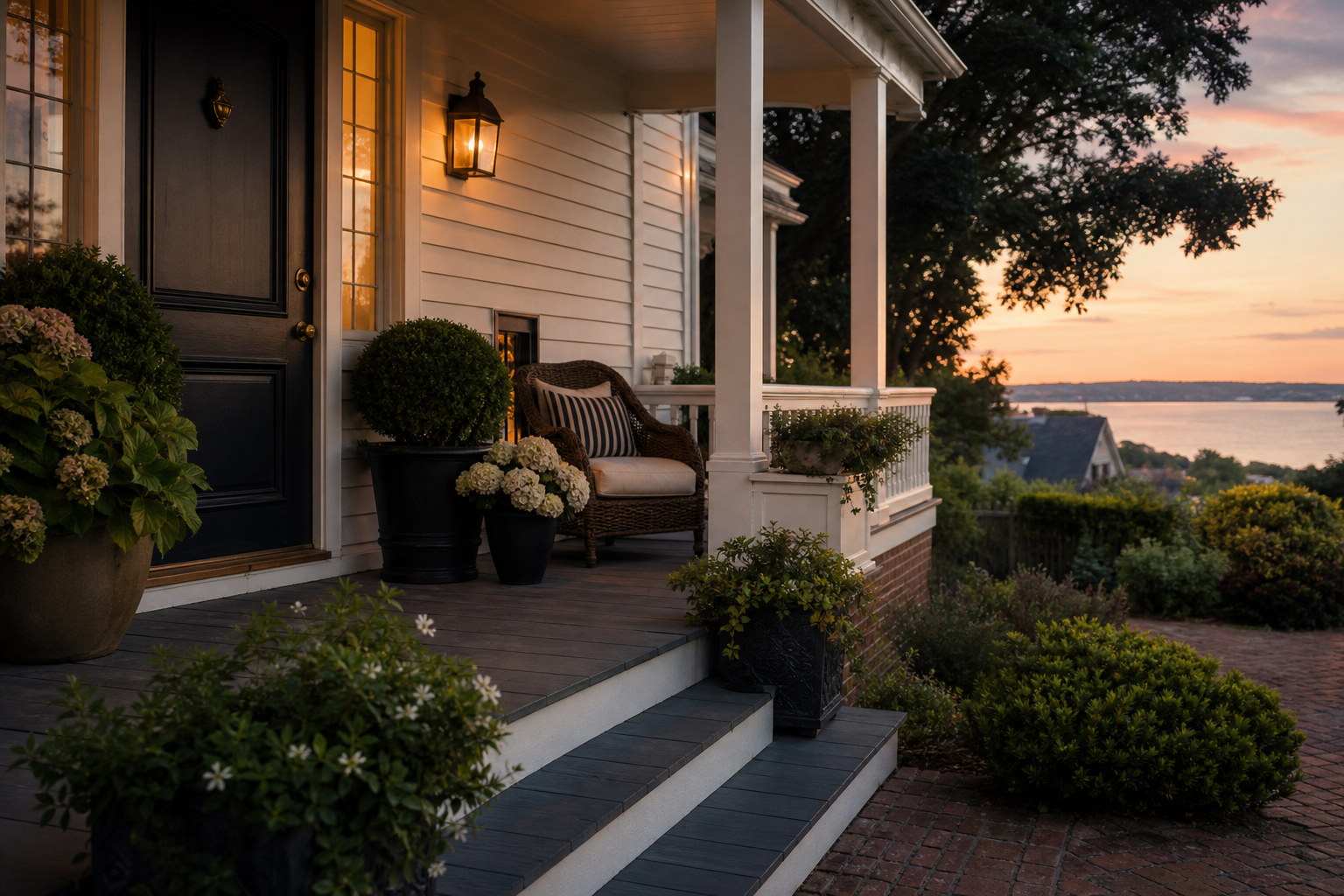
In Salem, you might be looking at a beautifully restored historic home with architectural details that are nearly impossible to reproduce today. In Beverly or Beverly Farms, your priorities might include ocean views, privacy, land, or direct water access.
And that's important because you're not just comparing prices. You're comparing completely different properties, locations, lifestyles, and long-term considerations.
How the North Shore Luxury Market Actually Works in 2026
The North Shore luxury market is really several smaller markets layered together. Town, neighborhood, waterfront access, lot size, architectural style, condition, and even the age of the home can have a major impact on value.
Beverly, with a recent area median sale price of approximately $805,000 according to recent Zillow market data, sits toward the higher end of the broader North Shore market.
Salem, with a recent area median of approximately $585,000, is very different. Its luxury market can include Federal, Colonial Revival, and other architecturally significant properties that you simply won't find in newer communities.
Here is a snapshot of recent market data for several areas I work in, based on trailing sales data as of August 2026:
| Area | Median Sale Price | Median Days on Market |
|---|---|---|
| Salem | $585,000 | 63 |
| Beverly | $805,000 | 40 |
| Lynn | $550,000 | 20 |
| Revere | $610,000 | 50 |
| Malden | $585,000 | 49 |
| Boston | $790,000 | 9 |
These are area-level medians, so don't use this chart to determine what a particular luxury property should be worth.
A home's actual value can change significantly based on its street, condition, square footage, land, renovations, architectural significance, water access, and other features.
The chart does, however, give you some perspective on how different these markets can be.
Beverly's longer days on market compared with Boston, for example, illustrates something buyers should understand about luxury real estate: a distinctive property may need the right buyer, not necessarily the fastest buyer.
For additional Greater Boston context, a January 2026 Banker & Tradesman report citing Redfin data showed new luxury listings down 8.9%, pending sales down 7.8%, and closed sales down 15.6% year over year. The median luxury sale price in that report was $2.84 million, with a median of 55 days on market.
That creates an interesting environment for luxury buyers. There may be fewer properties available, but buyers at higher price points can also be more deliberate about their decisions.
That's why I don't believe a luxury buyer's strategy should simply be "move fast."
It should be "be prepared."
When the right property becomes available, you want to be in a position to make a strong, informed decision.
What Actually Makes a North Shore Home “Luxury”?
There isn't one price where a North Shore home suddenly becomes a luxury property.
And I think that's important.
A $1.5 million property can represent something very different in one community than it does in another.
When I'm evaluating a luxury property with a buyer, I'm looking at the entire package, including things like:
- Location and neighborhood
- Water access or views
- Lot size and privacy
- Architectural significance
- Historic designation
- Square footage and layout
- Quality of finishes and renovations
- Condition and ongoing maintenance needs
- How the property compares with the upper end of its local market
I also think about the characteristics that may help the property hold its appeal over time.
A waterfront home in Beverly Farms and a restored Federal-period home in Salem's McIntire Historic District may both be considered luxury properties, but they are completely different purchases.
They may have different inspection concerns, insurance considerations, financing requirements, maintenance needs, and eventually different buyer pools when it's time to sell.
That's where local knowledge becomes particularly important.
Inspections Matter—Especially With Older and Coastal Homes
One of the things I love about North Shore real estate is its character.
But character can come with responsibility.
Some of our most desirable homes were built in the 18th or 19th century, and buying an older luxury home requires a different level of due diligence than purchasing newer construction.
Massachusetts residential inspection guidance identifies issues such as radon, lead paint, and Title 5 septic requirements as considerations in residential transactions.
Depending on the property, buyers may want to consider more than a standard home inspection.
That could include:
- Radon testing
- Lead paint assessment for homes built before 1978
- Title 5/septic review when applicable
- Specialized evaluation of older electrical, plumbing, roofing, or structural systems
- Structural review when conditions warrant it
Coastal homes can introduce another layer of questions.
Depending on the property, that may mean investigating:
- Flood risk and insurance
- Foundation condition
- Drainage and water intrusion
- Salt-air exposure
- Seawalls or other shoreline structures
- Long-term exterior maintenance
I would much rather have a buyer understand these things before purchasing the property than discover them after closing.
At this price point, due diligence isn't about finding reasons not to buy a house. It's about understanding exactly what you're buying.
Understand the Massachusetts Costs Before You Make an Offer
Luxury buyers should also understand the costs associated with a Massachusetts real estate transaction before writing an offer.
Massachusetts has a deeds excise tax, currently set at $4.56 per $1,000 of consideration under Chapter 64D of the Massachusetts General Laws.
In a typical transaction, this is generally a seller-side expense, but transaction terms and more complex ownership or financing structures should always be reviewed with your real estate attorney.
That's actually part of a larger point I make with buyers:
Don't make assumptions about closing costs simply because you've purchased real estate somewhere else.
Massachusetts has its own process, customs, attorneys, contracts, timelines, and expenses. If you're relocating here from another state, some parts of the transaction may feel very different from what you're used to.
Your agent, lender, and attorney should help you understand the numbers before you commit.
Financing a North Shore Luxury Home
Many luxury purchases require jumbo mortgage financing, which can come with different underwriting requirements than a conventional conforming mortgage.
Depending on the lender and loan, you may be asked for:
- Additional financial documentation
- Larger cash reserves
- A larger down payment
- More detailed asset verification
- A more involved appraisal process
If you're paying cash, sellers will typically want current, verifiable proof of funds.
Either way, this is one area where I don't recommend waiting until you find the house.
Get your financial documentation organized before you start seriously shopping.
I walk buyers through this early because I don't want someone finding the property they've been waiting for and then scrambling to put the financial side together.
Preparation gives you options.
What About Off-Market Luxury Homes?
Luxury buyers often ask me about off-market properties.
Some higher-end sellers prefer privacy and discretion, which means certain opportunities may be shared within professional networks before—or instead of—being broadly marketed.
That doesn't mean every great luxury property is secretly being sold off-market. Most buyers should still pay close attention to publicly listed inventory.
But it does mean relationships and local market knowledge can matter, particularly when you're looking for something very specific.
I've worked in this market for more than 20 years, and knowing the communities, the housing stock, and the local real estate community helps me understand where opportunities may exist.
If you're relying only on listing alerts and public real estate portals, you're seeing what's publicly available.
A good buyer strategy goes beyond waiting for an app notification.
How I Recommend Luxury Buyers Prepare
Before we start seriously touring luxury homes, I want to understand more than your maximum purchase price.
I want to know:
- What communities you're considering
- What type of property you're looking for
- What features are truly important to you
- What you're willing to compromise on
- Your financing or cash position
- Your timeline
- Your comfort level with renovation or historic properties
- Whether water access, privacy, commute, land, or architecture matters most
Because at the luxury level, buying the “best” house isn't the goal.
Buying the right house for you is.
Your strategy should reflect your lifestyle, finances, long-term goals, and the property itself.
If you'd like to understand what's currently available and what it may take to compete for the right property, that's a conversation I'm happy to have.
And if you're also interested in understanding North Shore home values across different price points, you can read my guide to unlocking your home's value on the North Shore.
You can also read my Google reviews to hear directly from clients I've worked with.
Frequently Asked Questions About North Shore Luxury Real Estate
What makes a North Shore home qualify as luxury?
There isn't a single price threshold.
Luxury on the North Shore can be defined by a combination of location, water access, privacy, lot size, architecture, historic significance, square footage, finishes, condition, and where the property sits relative to the rest of its local market.
That's why what qualifies as luxury in Salem may be very different from what qualifies as luxury in Beverly.
How competitive is the North Shore luxury market compared with Greater Boston?
The luxury market tends to have a smaller buyer pool and distinctive properties may take longer to sell than homes in the broader residential market.
That doesn't mean competition disappears.
A special property that is priced correctly can still generate significant interest and potentially multiple offers.
The important thing is not assuming that every luxury property—or every North Shore community—behaves the same way.
What should I know about inspections when buying a coastal North Shore home?
Start by understanding the property itself.
In addition to a traditional home inspection, depending on the home, buyers may want to investigate flood exposure, insurance requirements, the foundation, drainage, seawalls or shoreline structures, septic systems, lead paint, radon, and other issues associated with older or coastal properties.
The right inspections depend on the property. I don't believe in a one-size-fits-all approach to due diligence.
How does the Massachusetts deeds excise tax work on a luxury purchase?
The Massachusetts deeds excise is currently set at $4.56 per $1,000 of consideration under Chapter 64D of the Massachusetts General Laws.
In a typical transaction, the seller generally pays the deeds excise, but your attorney should explain how it applies to the specific transaction, particularly when dealing with unusual financing, ownership structures, assumptions, or other complexities.
Which North Shore communities should luxury buyers consider?
That depends on what “luxury” means to you.
If you're looking for historic architecture, your search may look very different from someone prioritizing water access, acreage, privacy, commuting options, or newer construction.
Beverly and Beverly Farms offer some very different opportunities from Salem. Other North Shore communities may also make sense depending on what you're trying to accomplish.
I prefer starting with your priorities rather than a list of towns.
Once I understand the lifestyle and property you're looking for, we can determine which communities deserve your attention.
The Right Luxury Purchase Starts With Preparation
The North Shore luxury market can offer some truly special properties, but I don't believe buying at this level should be rushed simply because a beautiful house comes on the market.
Understand the property.
Understand the numbers.
Understand the community.
And understand what you're taking on—not just at closing, but over the years you plan to own the home.
Real estate can be an important part of building and preserving long-term and generational wealth, but the goal isn't simply to own an expensive property. It's to make a smart purchase that supports your lifestyle and your financial goals.
If you're considering a luxury home on the North Shore, the first step doesn't have to be touring houses. We can start with a conversation about what you're looking for, what matters to you, and what the market actually looks like.
About Cynthia Nina-Soto
Cynthia Nina-Soto is a REALTOR® and founder of Nina-Soto Realty, a boutique, woman-owned, bilingual brokerage with more than 20 years of experience serving Salem, the North Shore, and Greater Boston. She helps buyers and sellers make informed real estate decisions and build and preserve generational wealth through real estate, from first-time home purchases to multi-million-dollar properties. Cynthia leads The Alianza Group.
Nina-Soto Realty · (978) 693-5643
Equal Housing Opportunity. Cynthia Nina-Soto, MA Broker License #9518117; ABR®, RENE, ePRO, AHWD, MRP, PSA, C2EX. Licensed by the Massachusetts Real Estate Commission. This article is general information only and is not legal, tax, or financial advice. Confirm all costs, tax obligations, inspection requirements, and transaction details with your attorney, tax advisor, lender, insurance professional, inspector, or closing officer.
Check out this article next
North Shore Coastal Zoning: What Investors Need to Know
Explore the shifting landscape of North Shore coastal zoning under Massachusetts environmental law and updated FEMA flood maps. Learn what investors need
Read Article