


Why is Peabody, MA 01960 America’s hottest ZIP code? A local North Shore real estate broker explains what’s driving demand and what buyers and sellers should know.
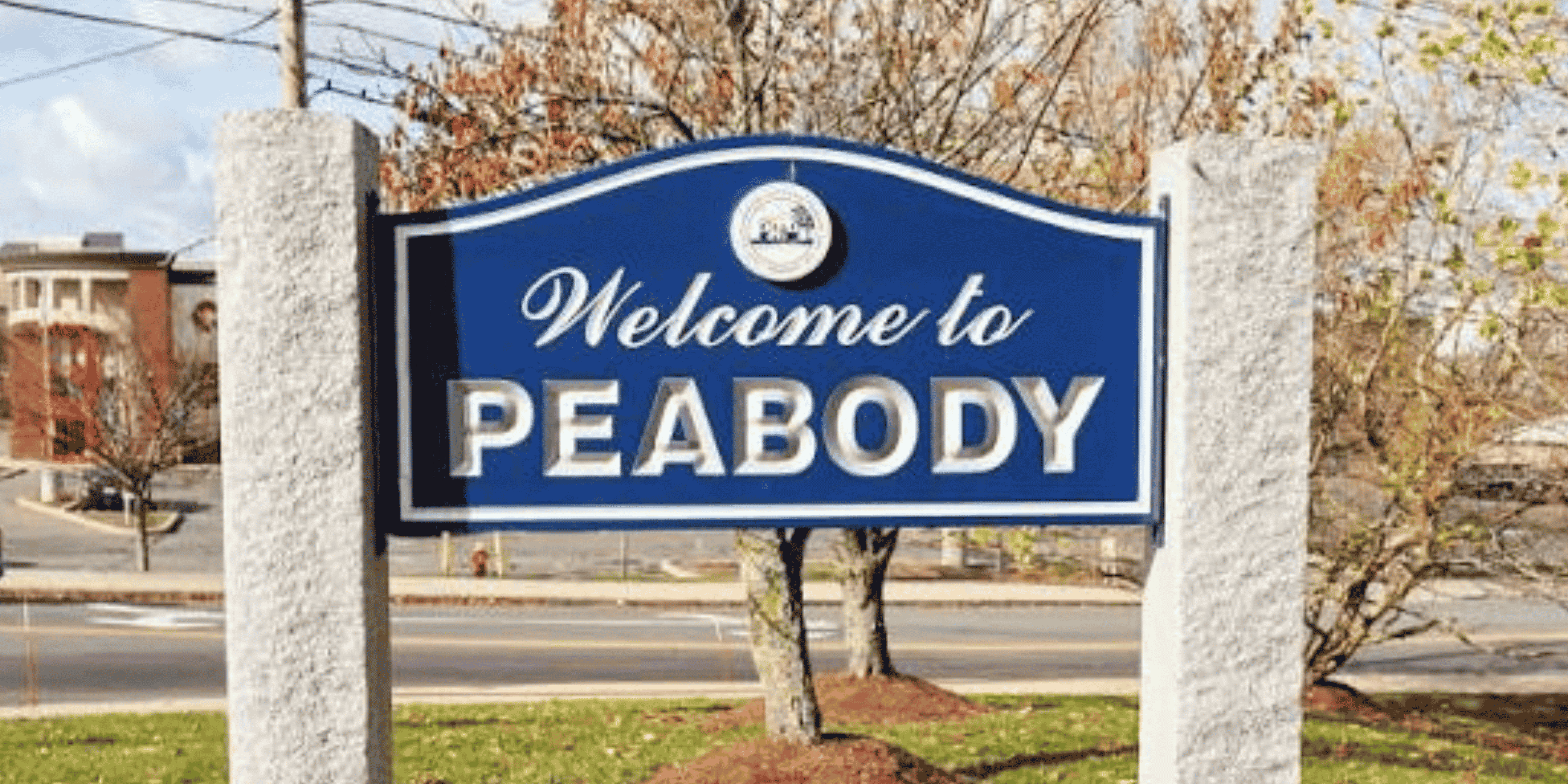
Peabody, Massachusetts, ZIP code 01960, was named the #1 hottest ZIP code in America for 2026 by Realtor.com. But the more interesting story isn't that America suddenly discovered Peabody. It's that Greater Boston buyers have been paying attention to Peabody for a while.
According to Realtor.com's 2026 Hottest ZIP Codes report, Peabody earned the top spot based on buyer demand and how quickly homes are selling.
Homes in 01960 received more than four times the national average listing views during the first half of 2026 and spent about 20 days on the market.
Those are impressive numbers.
But here's the number that stood out to me: approximately 70% of the demand for Peabody came from within the Boston metro area.
That makes complete sense to me.
I work with buyers and sellers throughout Peabody, Salem, and the North Shore, and Greater Boston buyers didn't suddenly discover Peabody this summer.
What's changing isn't Peabody.
It's the math.
Higher home prices closer to Boston, mortgage rates, limited inventory, and monthly payments are forcing buyers to look differently at where they can live.
And when they do, Peabody starts making a lot of sense.
Why is Peabody, MA 01960 so popular with homebuyers?
Peabody gives buyers a combination that's becoming harder to find around Greater Boston: different types of housing, access to major highways, proximity to Boston and the North Shore, established neighborhoods, and more choices for what your housing budget can buy.
Notice I didn't say Peabody is cheap.
It isn't.
According to Realtor.com's June 2026 Peabody market data, the median listing price in 01960 was approximately $649,900 and the median sold price was $673,000.
But buyers don't shop for homes in a vacuum.
Someone with a $650,000 or $750,000 budget might be looking at Peabody, Salem, Beverly, Danvers, Saugus, Lynn, communities closer to Boston, or some combination of all of them.
The question isn't simply:
Where is the cheapest house?
It's:
Where does my money buy the combination of home, location, commute, and lifestyle I actually want?
That's where Peabody becomes very competitive.
The first thing I tell buyers: Peabody isn't one real estate market
This is something that's easy to miss if you're researching Peabody online.
Searching for a home in Peabody isn't specific enough.
West Peabody feels different from South Peabody. The neighborhoods closer to Peabody Square feel different again. Your housing options change. Your lot sizes can change. How you get to work can change.
Even which highway matters most to you can affect where in Peabody you want to live.
A buyer who needs Route 1 may approach the city differently from someone who needs quick access to Route 128. Someone planning to use the commuter rail from Salem has another consideration entirely.
That's why two buyers with the same $700,000 budget can both tell me they want Peabody and end up looking at completely different homes.
The market data reflects some of those differences, too. Realtor.com's current Peabody data identifies distinct areas including West Peabody, South Peabody, Peabody Town Center, and Proctor.
You can't really understand Peabody real estate by looking at the 01960 median alone.
What is the Peabody, MA real estate market doing in 2026?
Peabody remains a strong seller's market, but the #1 hottest ZIP code headline doesn't mean every house is selling immediately or that sellers can name their price.
As of June 2026, Realt.com's 01960 housing market data reported:
Median listing price: $649,900
Median sold price: $673,000
Median price per square foot: $392
Median days on market: 25 days
Average sale-to-list price ratio: approximately 103%
Realtor.com classified 01960 as a seller's market, meaning there were more buyers looking than homes available.
But here's where the headline and the actual market need some context.
Active listings in 01960 were up approximately 29% from the previous year, and median days on market had also increased.
That's important.
You can simultaneously have one of the most sought-after ZIP codes in America and buyers who are becoming more selective.
Those two things aren't contradictory.
Buyers will compete for the homes they perceive as being worth competing for.
They will also let an overpriced home sit.
Why are Boston-area buyers looking at Peabody?
This is where I think Realtor.com's 70% statistic tells the real story.
Greater Boston buyers are widening their maps.
A buyer might start a search wanting to be closer to Boston. Then we start comparing homes and monthly payments.
What does $700,000 buy here?
What does it buy five miles north?
What changes if we go another five miles?
How much space do I get?
What does the commute look like?
Do I get a garage?
A yard?
An extra bedroom?
What are the taxes?
What are the utilities?
What am I actually giving up, and what am I gaining?
Those conversations can completely change a home search.
And Peabody sits in a very interesting position because you're still connected to Greater Boston while also having access to the rest of the North Shore.
Peabody and Salem are next-door neighbors, but they're very different markets
I think this is something people outside the North Shore don't always appreciate.
Peabody and Salem literally share a border.
And in everyday life, the two cities overlap more than a map might suggest.
You can live in Peabody and have Salem be part of your regular routine. Downtown Salem, restaurants, the waterfront, medical facilities, events, and the commuter rail can all be minutes away.
Likewise, people who live in Salem are constantly crossing into Peabody for Route 114, shopping, restaurants, medical appointments, the mall, and access to the highways.
But buying a home in Salem and buying a home in Peabody can be two very different experiences.
Salem may appeal more to someone prioritizing walkability, downtown living, historic architecture, cultural attractions, and direct MBTA Commuter Rail access.
Peabody may appeal more to a buyer prioritizing highway access, more suburban neighborhoods, different single-family housing options, and larger lots in certain parts of the city.
Sometimes a buyer tells me they want Salem when what they really want is access to Salem.
That's an important distinction.
And sometimes someone starts out convinced they want Peabody and realizes they'd rather trade some space for Salem's walkability.
Neither answer is wrong.
The point is understanding what you're actually trying to accomplish with your move.
If you're considering both cities, my guide to Historic Downtown Salem real estate explains more about what buyers and investors should know about Salem.
Does Peabody have an MBTA Commuter Rail station?
No. Peabody does not currently have its own MBTA Commuter Rail station. Nearby Salem does, with service on the Newburyport/Rockport Line to Boston's North Station.
This matters because I don't like talking about Peabody's "Boston access" without explaining what that actually means.
Peabody is primarily a driving community when it comes to commuting. Route 128/I-95, Route 1, and Route 114 are important transportation corridors.
But depending on where you live in Peabody, Salem's commuter rail can also become part of the equation.
When I work with buyers, commute is one of the things I want to understand early because it can completely change which part of the North Shore makes sense.
I've written more about that in my guide to MBTA Commuter Rail and Greater Boston real estate, including how transportation access changes the way buyers search across the North Shore.
What kinds of homes can you find in Peabody?
One reason Peabody works for so many different buyers is the variety of housing.
You'll find condos and townhomes, smaller single-family homes, Capes, ranches, split-levels, Colonials, multifamily properties, and larger homes on bigger lots.
And again, where you are in the city matters.
West Peabody, for example, can attract someone looking for a more suburban feel and larger properties. Someone looking closer to Peabody Square may have completely different priorities.
That's why I wouldn't tell a buyer:
"Peabody's median price is $650,000, so that's what you should expect to spend."
That's not how it works.
A median gives you a snapshot of the city.
It doesn't tell you what a three-bedroom Cape in one neighborhood should sell for compared with a four-bedroom Colonial somewhere else.
The same is true if you're selling.
Your ZIP code isn't your home value.
What makes living in Peabody convenient?
Peabody is one of those cities where location can make everyday life pretty easy.
There's access to Route 128/I-95, Route 1, and Route 114. The Northshore Mall is right in Peabody, and MarketStreet Lynnfield is nearby.
But I don't think buyers choose Peabody because there's a mall.
It's the combination.
You can live in a residential neighborhood, get onto the highway relatively quickly, head into Salem for dinner, get to Beverly or Danvers, shop along Route 114, or be headed toward Boston without having to live in Boston.
That's the lifestyle equation buyers are evaluating.
What is Peabody Municipal Light Plant, and why should buyers care?
This is one of those very Peabody things that buyers coming from another community may not know about.
Peabody has its own municipal electric utility.
Peabody Municipal Light Plant is a community-owned, not-for-profit utility serving Peabody and part of Lynnfield. PMLP reports that its electric rates are typically among the lowest in the region.
You can review PMLP's current residential rates directly through the utility.
Is anyone buying a house solely because of the electric company?
Probably not.
But this is exactly why I tell buyers that purchase price isn't the same thing as affordability.
Your mortgage is only one part of what it costs to own a home.
Property taxes, insurance, utilities, commuting, maintenance, and repairs all matter.
When you're comparing two communities, those details belong in the conversation.
Is Peabody, MA affordable?
Peabody is better described as offering relative value within Greater Boston than as being "affordable."
That's an important distinction.
A median home price in the $600,000s isn't affordable for a lot of households.
But the buyer who can spend $650,000, $700,000, or $800,000 is comparing what that money buys in different communities.
That might mean an extra bedroom.
A larger lot.
A garage.
A different commute.
A different neighborhood.
Or simply a home that requires less work.
This is why I think the national Peabody story is really a value story.
Greater Boston buyers are looking at the tradeoffs differently.
Is Peabody a good place for first-time homebuyers?
Peabody can absolutely be part of a first-time buyer's search, but buyers need to understand that 01960 is competitive.
Being competitive doesn't mean throwing money at every house.
It means being prepared.
Before seriously looking, I want a buyer to understand their financing, comfortable monthly payment, available cash, closing costs, and what they're willing to do if they find themselves in a multiple-offer situation.
Then we need to understand the house.
What have comparable properties sold for?
How long has this one been on the market?
What's the condition?
What competition does it have?
What terms matter to the seller?
And perhaps most importantly:
Is this house worth competing for?
Not every one is.
Good buyer representation isn't about telling you to offer more every time.
It's knowing when competing makes sense, how to make an offer stronger when it does, and when walking away is the better decision.
If you're thinking about buying in Peabody, Salem, or elsewhere on the North Shore, schedule a buyer consultation and we can compare what your budget actually buys across different communities.
What does Peabody being America's hottest ZIP code mean if you own a home here?
It means buyers are paying attention to your market.
That's good.
But please don't take the #1 ranking to mean your house is automatically worth 10%, 15%, or 20% more.
That's not what the ranking says.
A four-bedroom Colonial in West Peabody isn't competing with the same buyers as a two-bedroom condo. A house that has been renovated isn't necessarily competing directly with one that needs significant work.
Your home's value depends on your neighborhood, property type, size, condition, lot, updates, parking, recent comparable sales, and what else is available when you go on the market.
The national attention creates an opportunity.
The strategy is figuring out how to turn that attention into demand for your particular home.
Can you still overprice a home in America's hottest ZIP code?
Absolutely.
And this may be the most important thing I would tell a Peabody homeowner right now.
A hot market doesn't fix bad pricing.
Today's buyers have an incredible amount of information before they ever walk through your front door.
They're looking at comparable sales.
They're watching price reductions.
They're calculating mortgage payments.
They're checking days on market.
Some are even asking ChatGPT and other AI tools what a property should be worth.
When a home is priced correctly and presented well, buyers can feel the competition building.
When it's overpriced, they can feel that too.
And remember, Realtor.com's current Peabody data shows that inventory and days on market have both increased from last year, even while Peabody holds the title of America's hottest ZIP code.
That tells me buyers are interested.
It doesn't tell me they're indiscriminate.
If I were talking to a Peabody seller today, I wouldn't say:
"You're in America's hottest ZIP code. Name your price."
I'd say:
"You have buyer attention. Now let's make sure we don't waste it."
If you're wondering what the current demand actually means for your property, request a free Peabody home valuation. I'll look at the recent comparable sales, current competition, and how buyers are responding to homes like yours.
What does Peabody's #1 ranking tell us about the North Shore real estate market?
This is actually my biggest takeaway from the entire story.
Peabody didn't suddenly become desirable in August 2026.
What changed is how buyers are searching.
A buyer may start with a very small map.
Then the numbers start doing what numbers do.
Move the search five miles and the options change.
Go another five miles and they change again.
That's how someone who started looking closer to Boston suddenly finds themselves considering Saugus, Peabody, Salem, Beverly, Danvers, or farther north.
Each community gives them a different combination of house, commute, lifestyle, and price.
And that's why the statistic that 70% of Peabody's demand came from the Boston metro matters so much.
The story isn't:
America discovered Peabody.
It's:
Greater Boston buyers are redefining how far they're willing to look to get what they want.
Peabody just happens to be sitting in a very good spot on that map.
Frequently Asked Questions About Peabody, MA Real Estate
Why is Peabody, MA the hottest ZIP code in America?
Peabody's 01960 ZIP code ranked #1 on Realtor.com's 2026 Hottest ZIP Codes list because of strong buyer demand and market pace. Homes received more than four times the national average listing views during the first half of 2026 and spent approximately 20 days on the market.
What is the ZIP code for Peabody, Massachusetts?
The primary ZIP code for Peabody, Massachusetts is 01960. Realtor.com ranked 01960 the #1 hottest ZIP code in America for 2026.
What is the median home price in Peabody, MA?
According to Realtor.com's June 2026 data for 01960, the median listing price was $649,900 and the median sold price was $673,000. Those are ZIP-code-wide statistics. Individual home values vary based on location, property type, size, condition, and current competition.
How quickly are homes selling in Peabody?
Realt.com's Hottest ZIP Codes research reported that Peabody homes spent approximately 20 days on the market during the first half of 2026. Realtor.com's separate June 2026 market report showed a median of 25 days on market. The two figures cover different measurement periods.
Are Peabody homes selling over asking price?
Realt.com's June 2026 data reported an average sale-to-list ratio of approximately 103% for 01960. That is a market-wide statistic and doesn't mean every home in Peabody will sell above asking price.
Is Peabody a seller's market in 2026?
Yes. Realtor.com classified Peabody's 01960 ZIP code as a seller's market in June 2026, meaning buyer demand exceeded the available supply of homes.
What are the different areas of Peabody?
Peabody includes areas such as West Peabody, South Peabody, Peabody Town Center, and Proctor. Housing styles, prices, lot sizes, transportation access, and neighborhood feel can vary considerably depending on where you are within the city.
Is West Peabody different from other parts of Peabody?
Yes. West Peabody generally has a more suburban feel and includes many single-family homes and larger properties. Other parts of Peabody offer different housing stock and access to downtown, Route 1, Route 114, Salem, and other surrounding communities. Buyers should evaluate specific neighborhoods rather than treating all of 01960 as one market.
Is Peabody next to Salem, MA?
Yes. Peabody and Salem share a municipal border. The two cities are closely connected in everyday life, but their real estate markets, transportation options, neighborhoods, and housing stock can offer buyers very different experiences.
Does Peabody have an MBTA Commuter Rail station?
No. Peabody does not currently have its own MBTA Commuter Rail station. Neighboring Salem has service on the Newburyport/Rockport Line to Boston's North Station.
Does Peabody have its own electric company?
Yes. Peabody Municipal Light Plant is a community-owned, not-for-profit electric utility serving Peabody and part of Lynnfield. PMLP states that its rates are typically among the lowest in the region.
Is Peabody, MA a good place to buy a home?
Peabody can be a strong option for buyers looking for access to Greater Boston and the North Shore, varied housing options, highway access, and different neighborhood settings. Whether it's the right choice depends on your budget, commute, housing needs, and lifestyle.
Is now a good time to sell a house in Peabody?
Peabody currently has significant buyer demand, but the right time to sell depends on your property, equity, financial goals, timing, and next move. Being in America's hottest ZIP code doesn't determine an individual home's value. A local comparative market analysis can show how your specific property fits today's market.
Buying or Selling a Home in Peabody, MA?
Being named the #1 hottest ZIP code in America is something Peabody can celebrate.
But national rankings only tell part of the story.
If you own a home here, the important question isn't:
How hot is 01960?
It's:
What does today's demand mean for my house?
And if you're thinking about buying here, the question isn't whether Peabody is popular.
It's whether a particular home, in a particular part of Peabody, at a particular price, makes sense for you.
That's the part of real estate that can't be answered by a national ranking.
Real estate is local.
Sometimes it's neighborhood by neighborhood.
Sometimes it's street by street.
Nina-Soto Realty works with buyers and sellers throughout Peabody, Salem, the North Shore, and Greater Boston.
Get a free home valuation or schedule a consultation and let's talk about what this market means for you.
Sources and Peabody Resources
About Cynthia Nina-Soto
Cynthia Nina-Soto is a REALTOR® and founder of Nina-Soto Realty, a boutique, woman-owned, bilingual brokerage with over 20 years of experience serving Peabody, Salem, the North Shore, and Greater Boston. She helps buyers and sellers build and preserve generational wealth through real estate, from affordable starter homes to multi-million-dollar estates. Cynthia leads The Alianza Group.
Nina-Soto Realty
(978) 693-5643
Equal Housing Opportunity. Cynthia Nina-Soto, MA Broker License #9518117; ABR®, RENE, ePRO, AHWD, MRP, PSA, C2EX. Licensed by the Massachusetts Real Estate Commission.
This article is general information only and is not legal, tax, or financial advice. Market statistics change over time. Confirm current market conditions and financial, legal, or tax considerations with the appropriate professionals.
Check out this article next